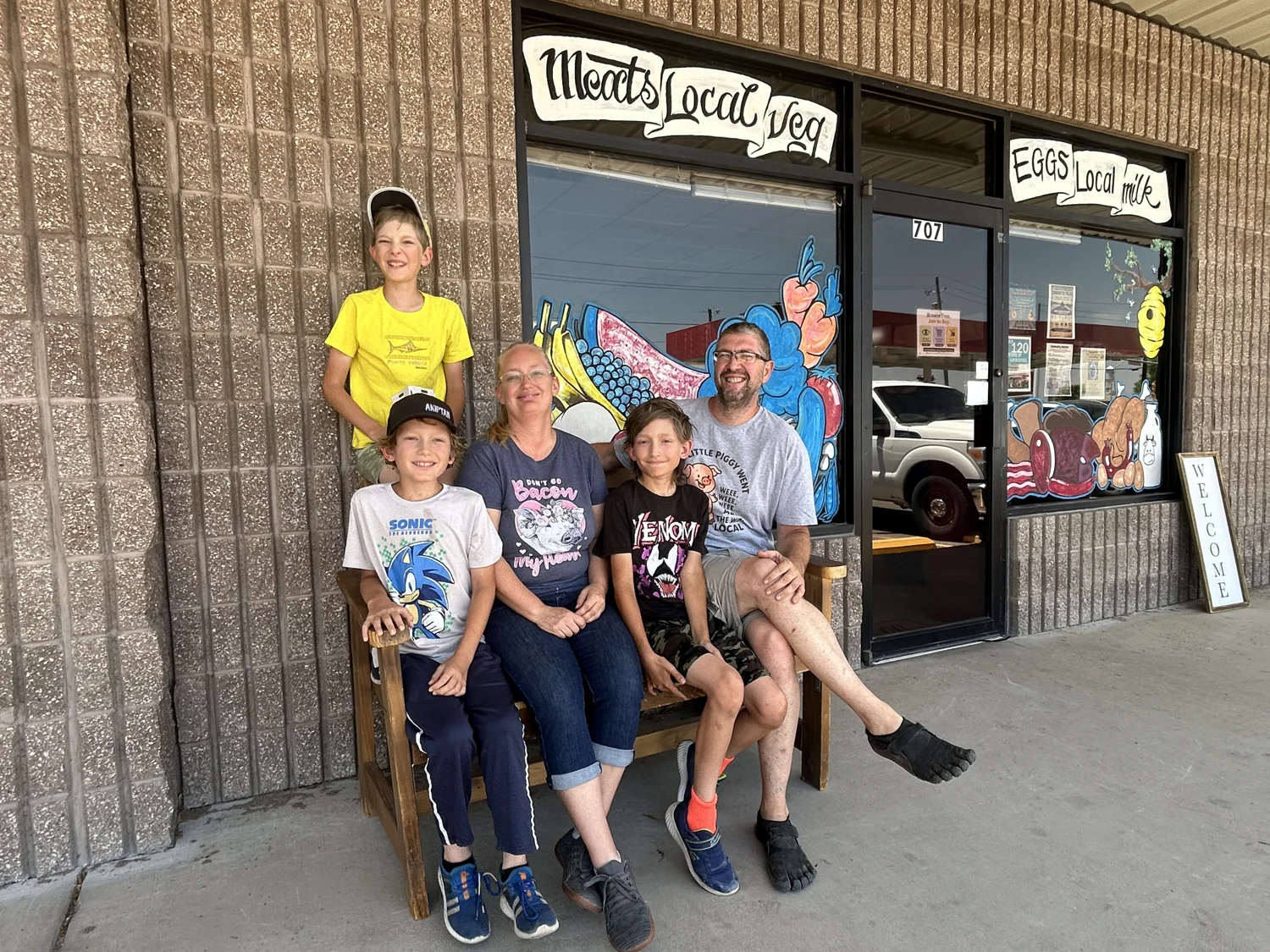
In June, Chris Whitson described Bomvida to me as “a year-round farmers market disguised as a grocery store.” Think about when the peaches are ready. The farmer has to pick them then, and you might need groceries on a Tuesday when there’s no market. Chris and Yana were trying to run a store that could be there for both.
When we spoke in June, Chris and Yana still had to sell perishable food and pay producers while they were building a customer base. Bomvida was trying a prepaid membership so that some of the grocery money would be there before the food changed hands. It depended on enough households being able and willing to commit.
Chris had worked in retail and software, and he used both to manage stock and memberships. Yana told me how early she had to get up to make food for the store before a day of legal work.
“I have to work and get up at five to make crackers and do ten hours of litigation.”
Chris picked a jar of honey as his example. He said Bomvida could print a label with the name of the family it came from and the month it was jarred. “That’s where the trust is, I think,” he said. Somebody has to keep that information from the time the honey comes in until someone takes it home.
Chris raised the possibility that the stores would close. A farmer needs to be paid when the food is ready. Chris was trying to work out how to pay for it before enough customers came in. The storefront closed soon after our June conversation. This account records the work as it was described in that moment.
About the work
- The need
- A steady outlet for growers and a place to shop between market days
- What changed
- Bomvida tried prepaid memberships to bring revenue in earlier and built software to trace products back to growers.
- What’s still difficult
- The interview describes the pressure of perishable food, wages and producer payments. The storefront closed soon after our June interview; Chris later described plans to wind down retail operations.
Interview
A year-round farmers market
Tina Trout Considering that the whole human has basic needs like subsistence, affection and participation, what needs in your community does this work satisfy?
Chris Whitson We’re the connection. It’s like a year-round farmers market disguised as a grocery store.
What the relationships cost
Tina Trout What relationships must exist for this work to happen successfully?
Chris Whitson The consumers and the farmers, obviously. The problem is to get to that point. It’s very expensive. This is open seven days a week. There are people here eight hours a day, seven days a week.
What the family brought to the work
Chris Whitson I’m a seventh-generation retailer. I know retail. And I write software. We treat each store as a warehouse, so we had to design our own inventory systems and our membership system.
Yana Whitson I have to get up at five to make crackers and do ten hours of litigation.
Adapting under pressure
Tina Trout What tensions, obstacles or challenges have been the most difficult to navigate?
Yana Whitson The money part.
Chris Whitson Just the money. There are big losses. We knew it was expensive.
[…]
Chris Whitson If we were going to pick the big aha moment, it’s this new membership that we started in January.
Closing reflection
Tina Trout Finish the sentence “All is in the small because…”
Chris Whitson That’s where the trust is, I think. We sell that more than anything. Our labeling system will print out that this honey came from this family and was jarred this month and this year. We can do that on the fly.
[…]
Chris Whitson It’s expensive, both for the consumer and for us.