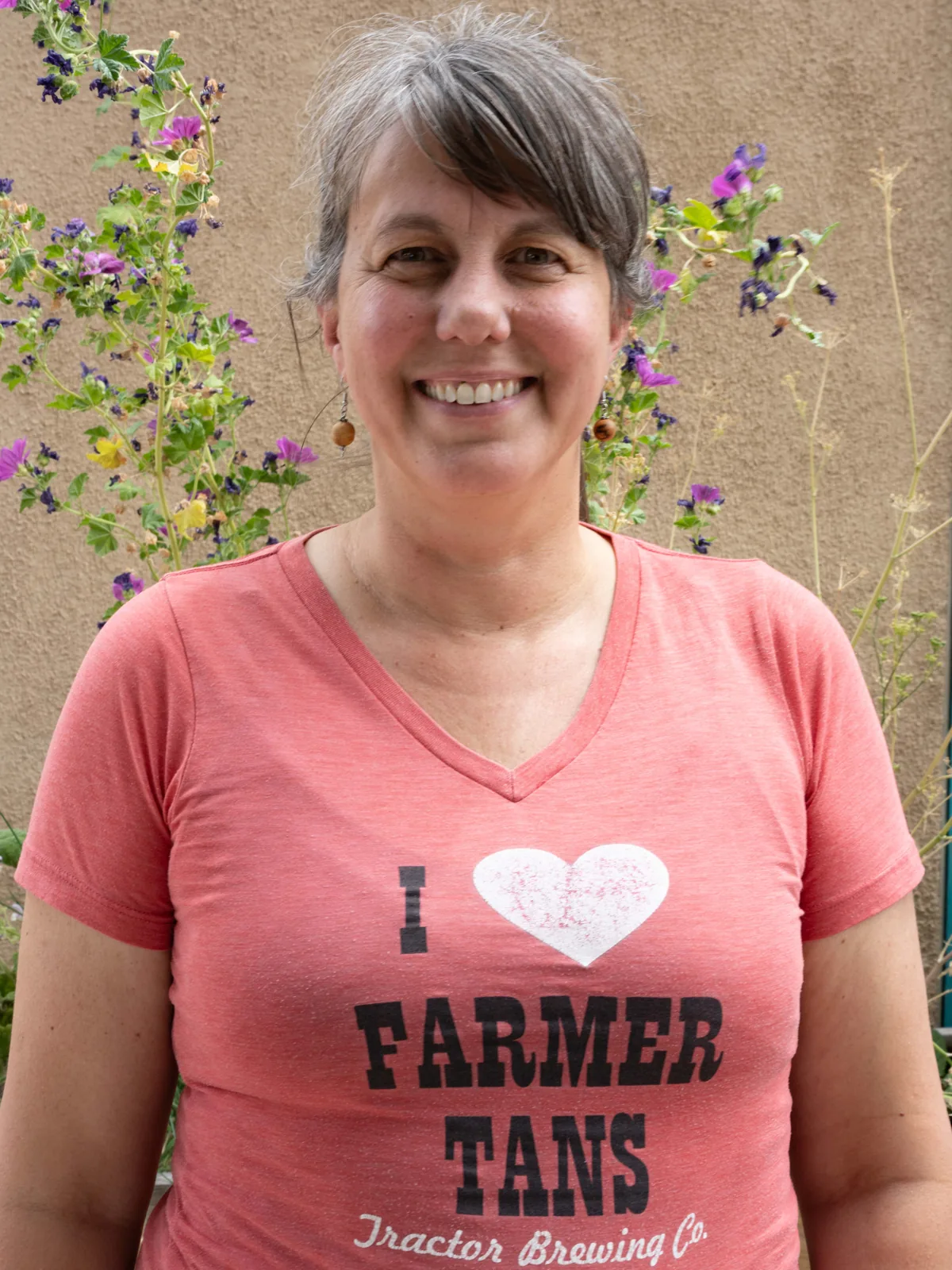
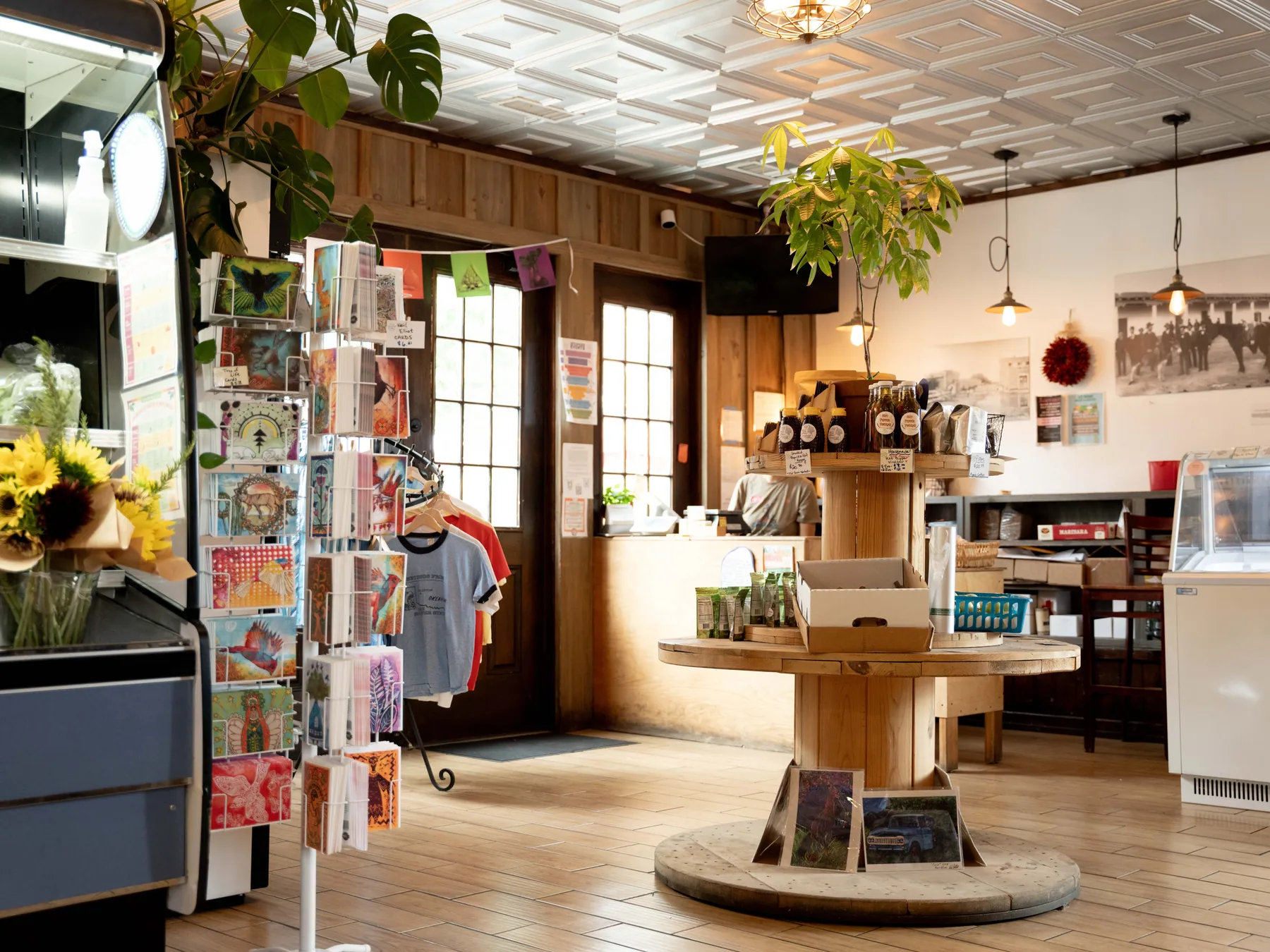
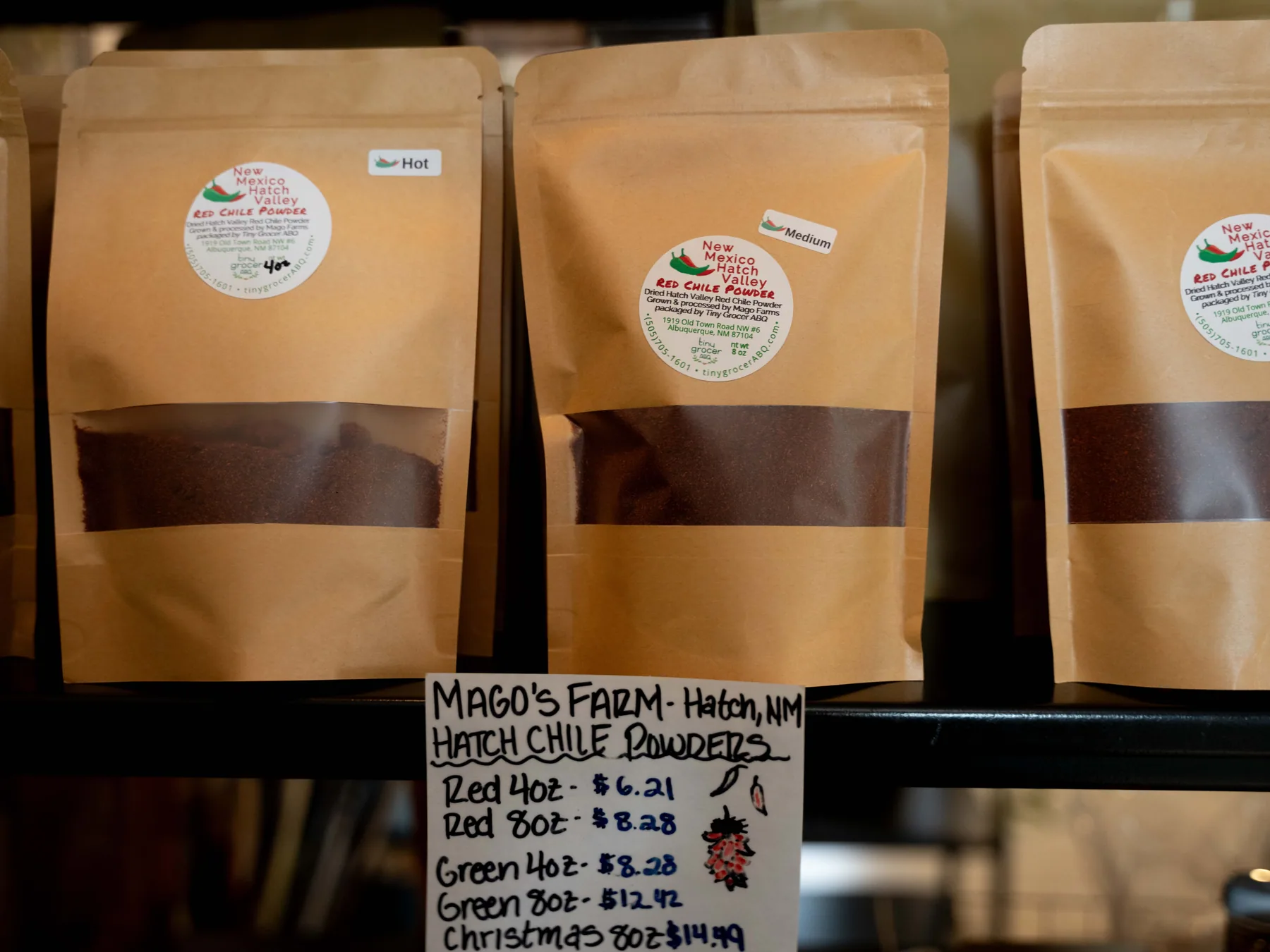
Liz Gaylor told me about the ukulele players who come to Tiny Grocer in Old Town Albuquerque. They found a place to meet and play. If all they wanted from the café was a glass of water, that was fine with Liz.
When we talked in June, Liz was considering how much more of the menu she could offer on a pay-what-you-can basis. There was already a community supper. We talked about what it takes to keep feeding people when there are ingredients to buy and staff to pay. “I still haven’t paid myself a salary since I started,” she told me.
“I feel like food is a human right and is the most important thing.”
She was precise about the relationship she had with staff. She could care about somebody and still be the person who wrote their check. Calling a workplace a family could make it harder to say where that power lay. The work of making the café hospitable included learning how to handle that responsibility.
When people told her she had created a community, she pointed to the people who showed up. They brought friends, met others, and made uses of the room she hadn’t assigned them. Her part was to make space for it and keep the doors open.
“People can just come and, like, meet and play ukulele and get free water.”
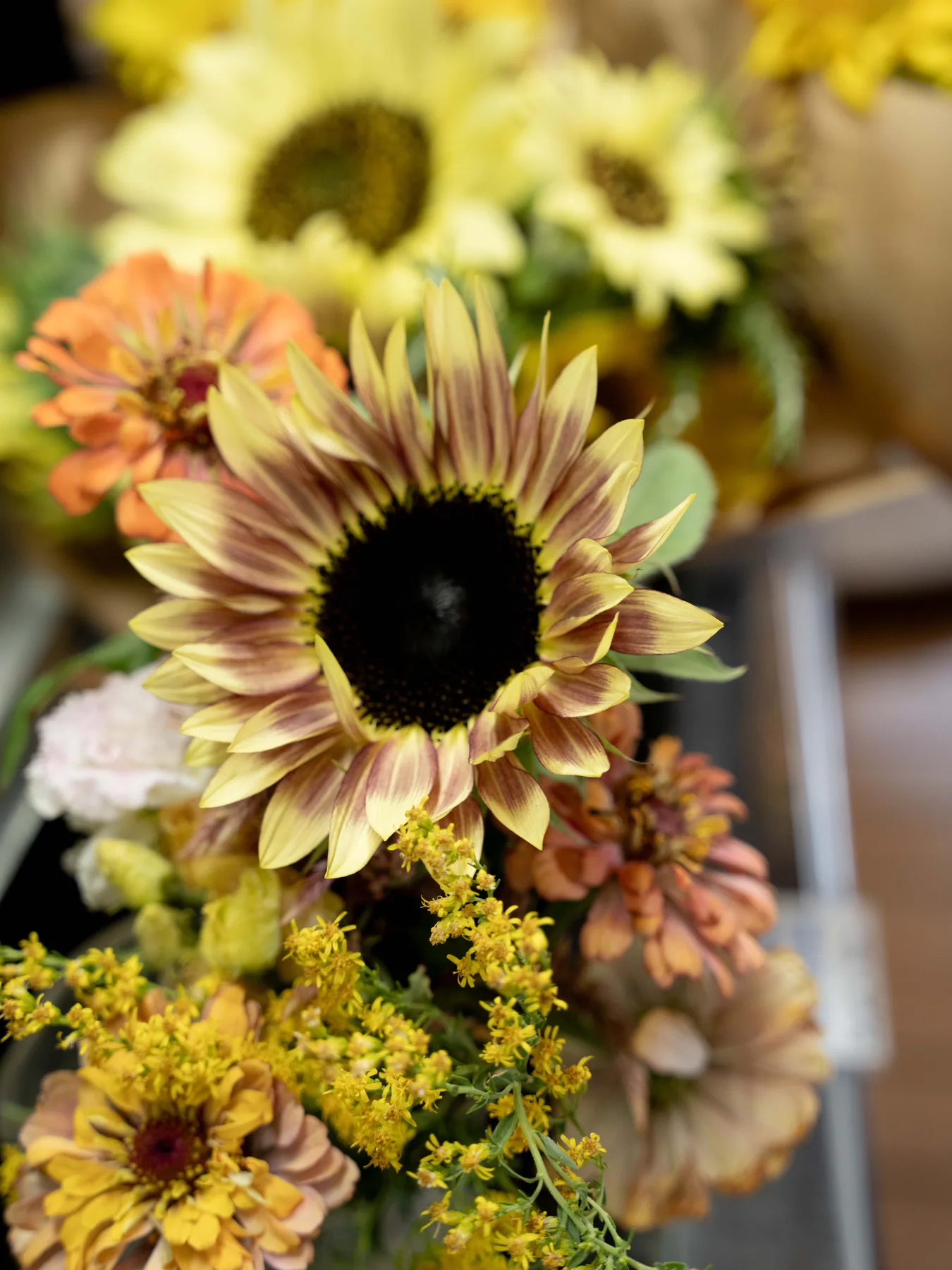
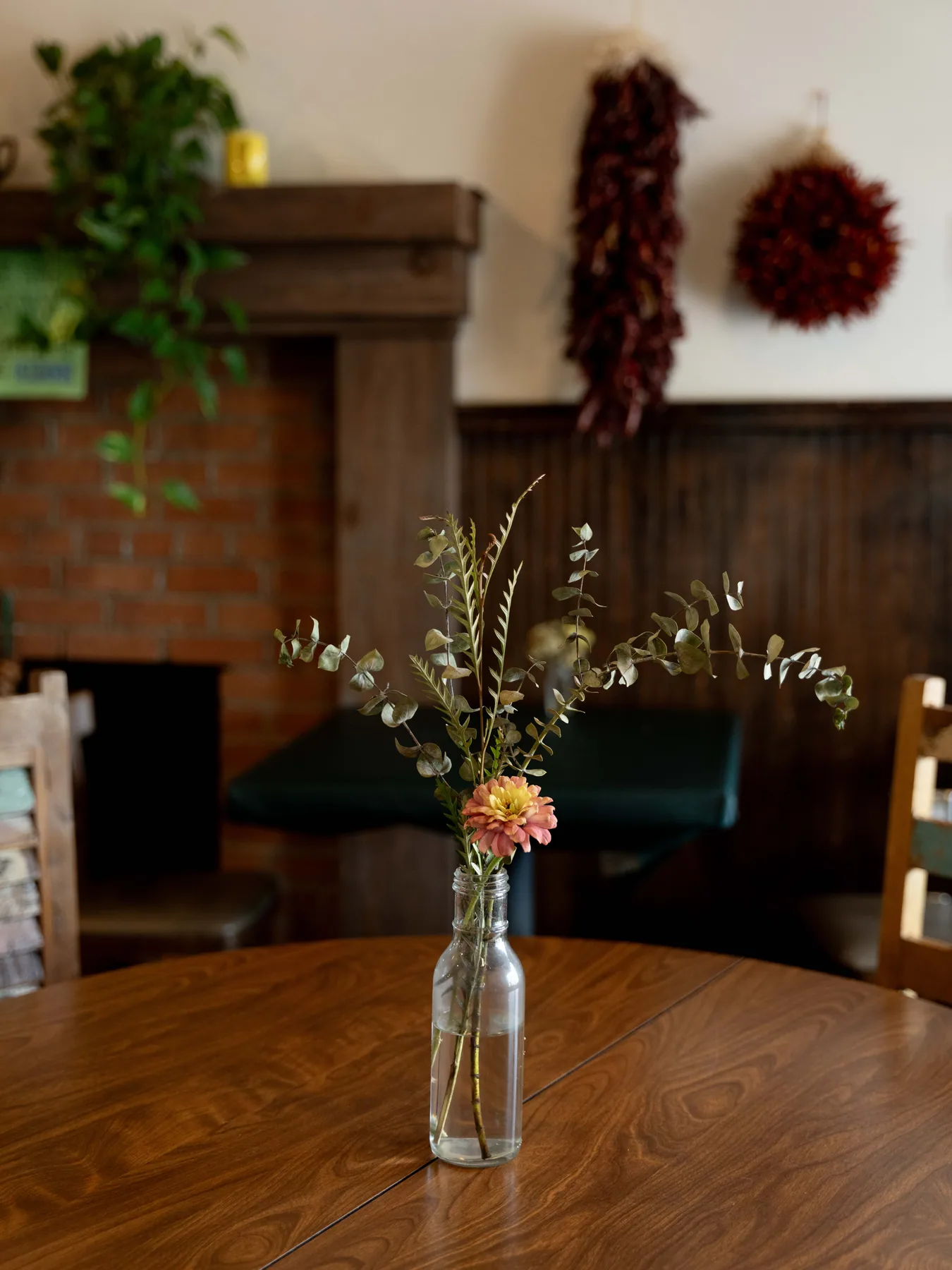
I asked her to finish the sentence ‘All is in the small because.’ “We forgot to put the flowers on the table this morning,” she said. “It fucking matters, dude.”
About the work
- The need
- A place to eat and gather with room for people who have less to spend
- What changed
- The café’s flexible prices and community supper opened the table to more people.
- What’s still difficult
- Liz’s June interview describes the labor and costs behind the arrangement. A wider pay-what-you-can model was still under consideration.
Interview
Food and the community supper
Tina Trout What needs in your community does this work satisfy?
Liz Gaylor I feel like all of them on some level. One of my biggest reasons for having the community supper and doing pay what you can on the menu is that I feel like food is a human right. We’ve been looking at switching to one hundred percent pay what you can, or working more in that model. There are so many other layers to the human experience and to care for yourself, for each other and for where we are.
The workplace
Tina Trout What relationships must exist for this work to happen successfully?
Liz Gaylor It feels complicated. I don’t want to be like, “Oh, I’m your friend,” because it feels unfair. It’s not a fair relationship for them because of the power dynamic. I’m writing their check.
What Liz brings to the work
Tina Trout What strengths, resources or forms of local knowledge make this possible?
Liz Gaylor I’ve worked in food pretty much ever since I first started working. I’ve always worked in restaurants. I worked for a bunch of years with local farms in Colorado. We had a large CSA. We sold at farmers markets and opened little grocery hubs for pickup.
Adapting under pressure
Tina Trout Can you describe a moment when a challenge, failure or unexpected event forced you to adapt?
Liz Gaylor Learning how to hire people. Every single time I’m like, “Oh, that thing when I met them, that tiny moment.” That is the thing I have to pay attention to. I feel like that has been maybe my biggest lesson.
What people make of the room
Tina Trout What exists today because of this work that did not exist before?
Liz Gaylor It exists because of the people coming here. You guys come in with your friend groups, or you’ve met people here. I feel like I’m just creating the space for it.
Liz Gaylor People can just come and meet and play ukulele and get free water. They don’t have to feel like, how long have you been at this table? Did you buy anything?
Closing reflection
Tina Trout All is in the small because… What does that bring up for you?
Liz Gaylor I’m like the devil in the details. We forgot to put the flowers on the table this morning. It fucking matters, dude.
[…]
Liz Gaylor I can find joy in this exact moment. The devil’s in the details, but so is joy. Right now I’m carrying dishes and walking through the kitchen, and it’s great.
More from Kiara’s visit 8 photographs