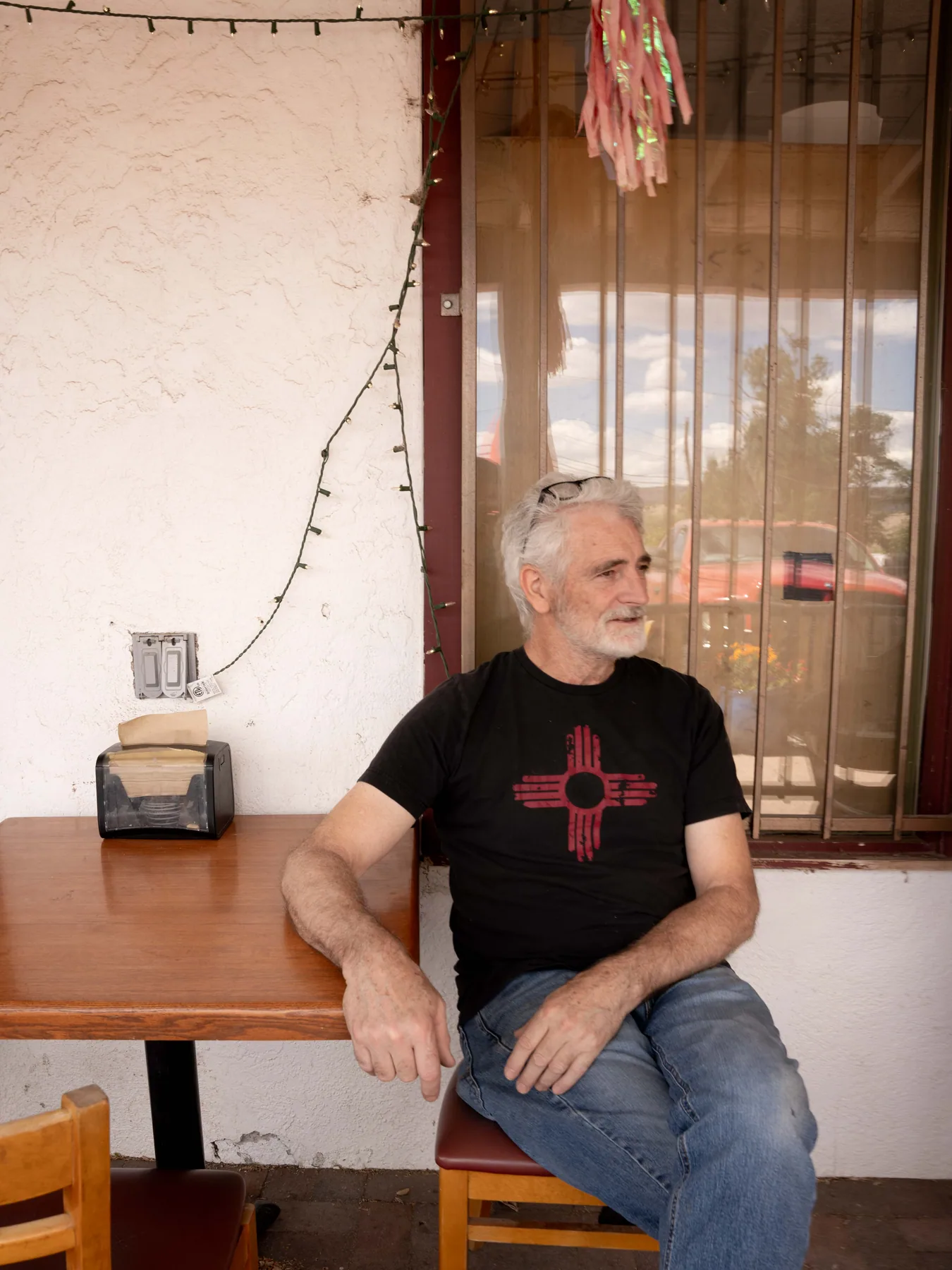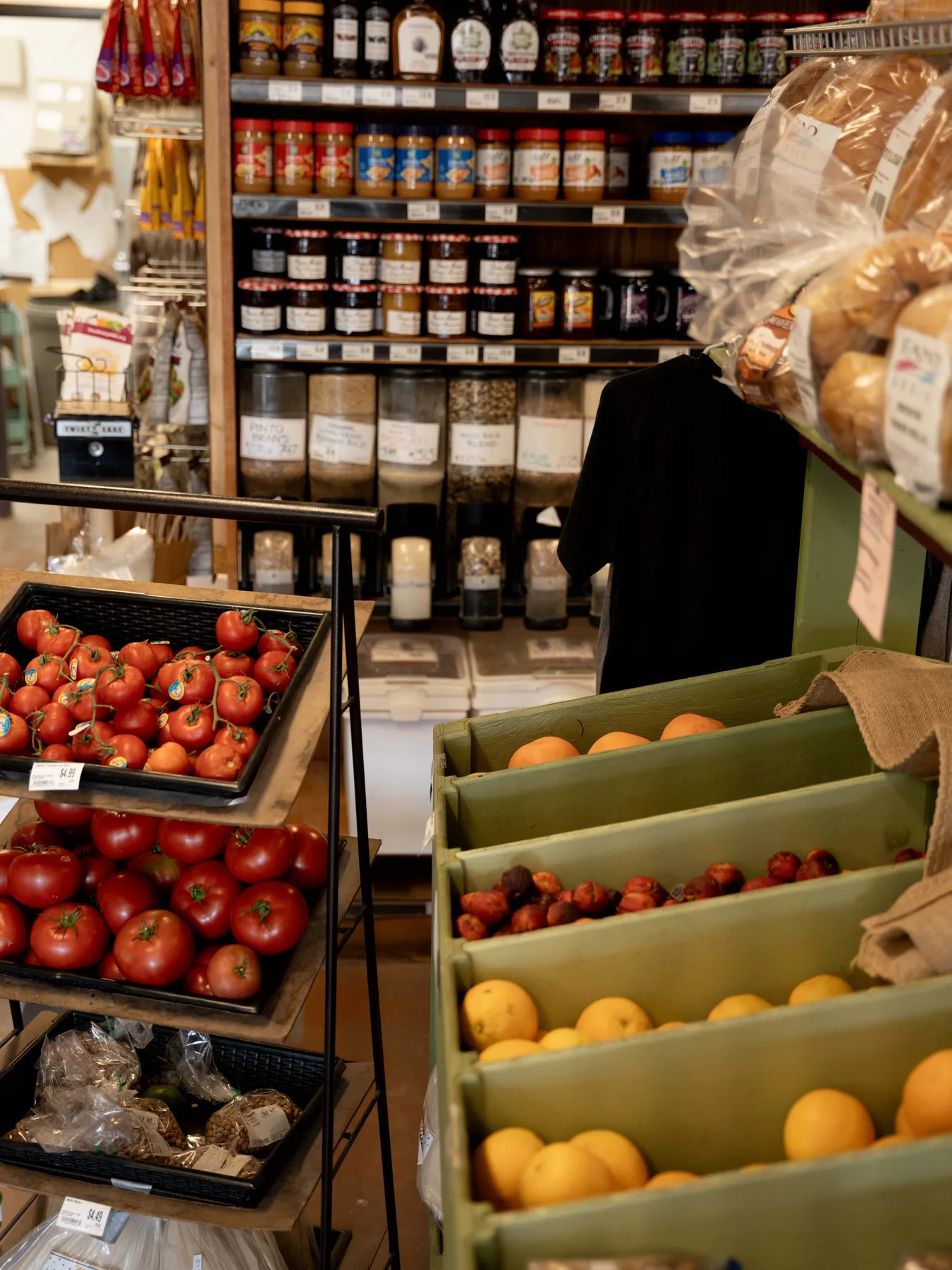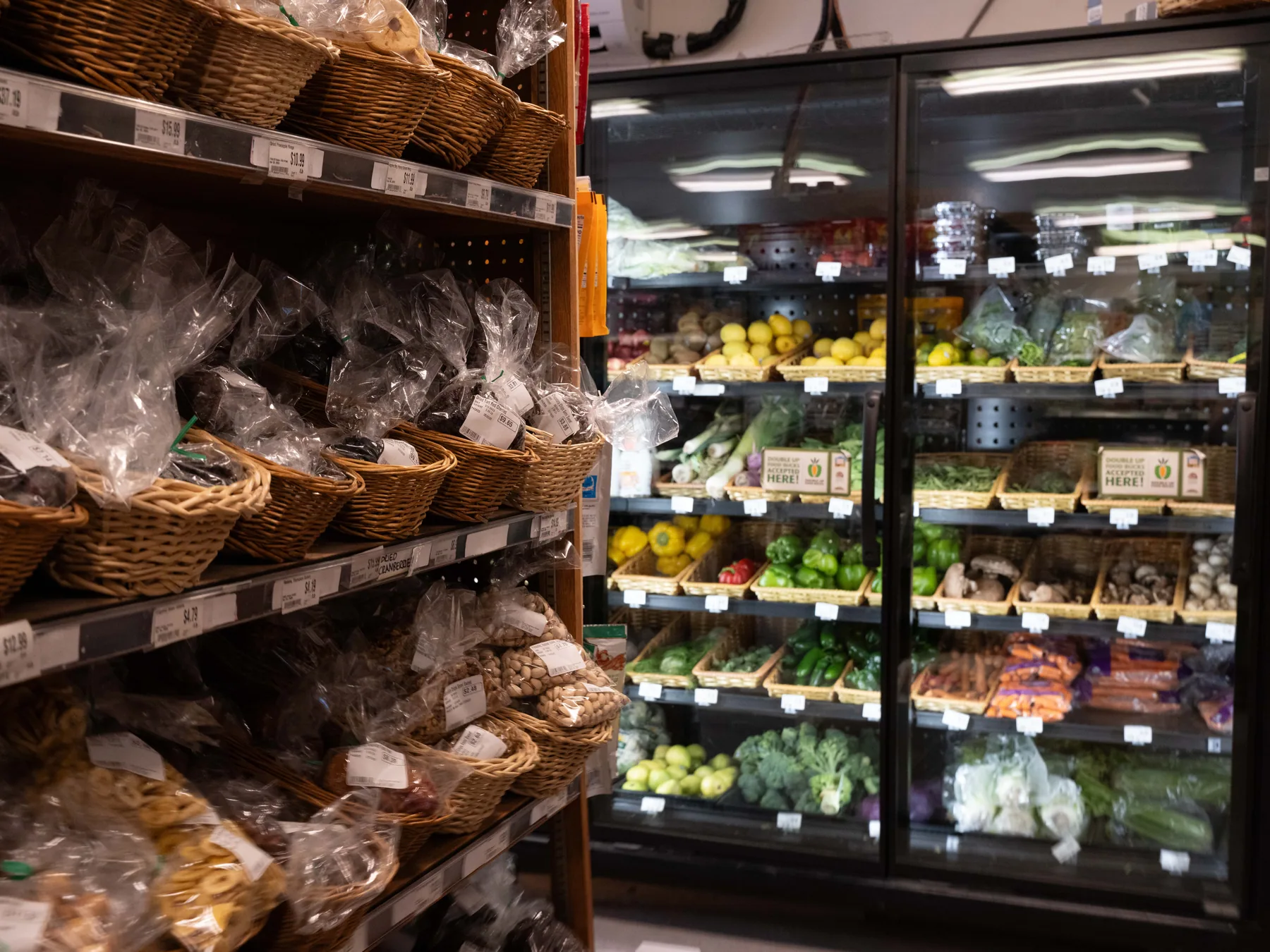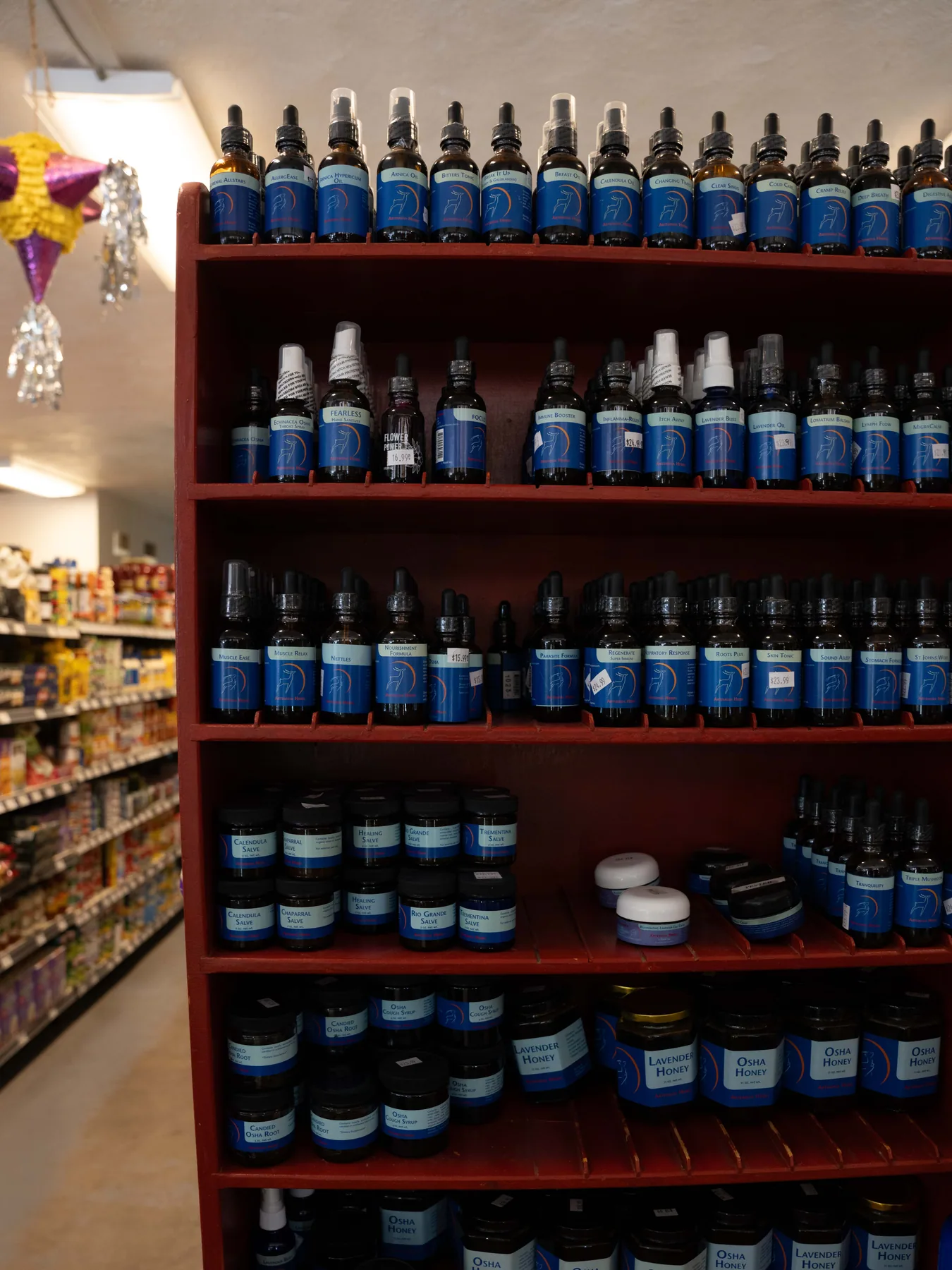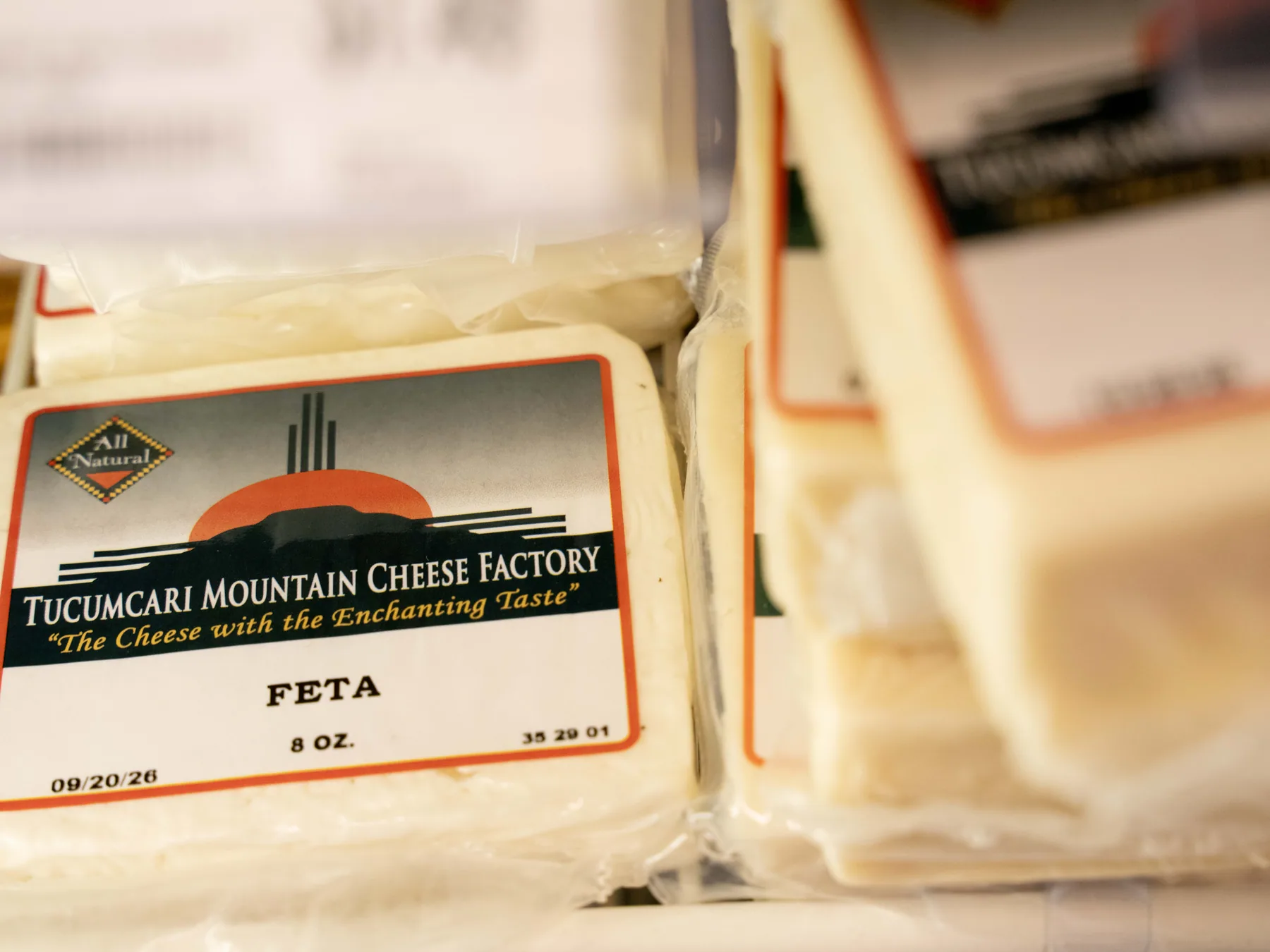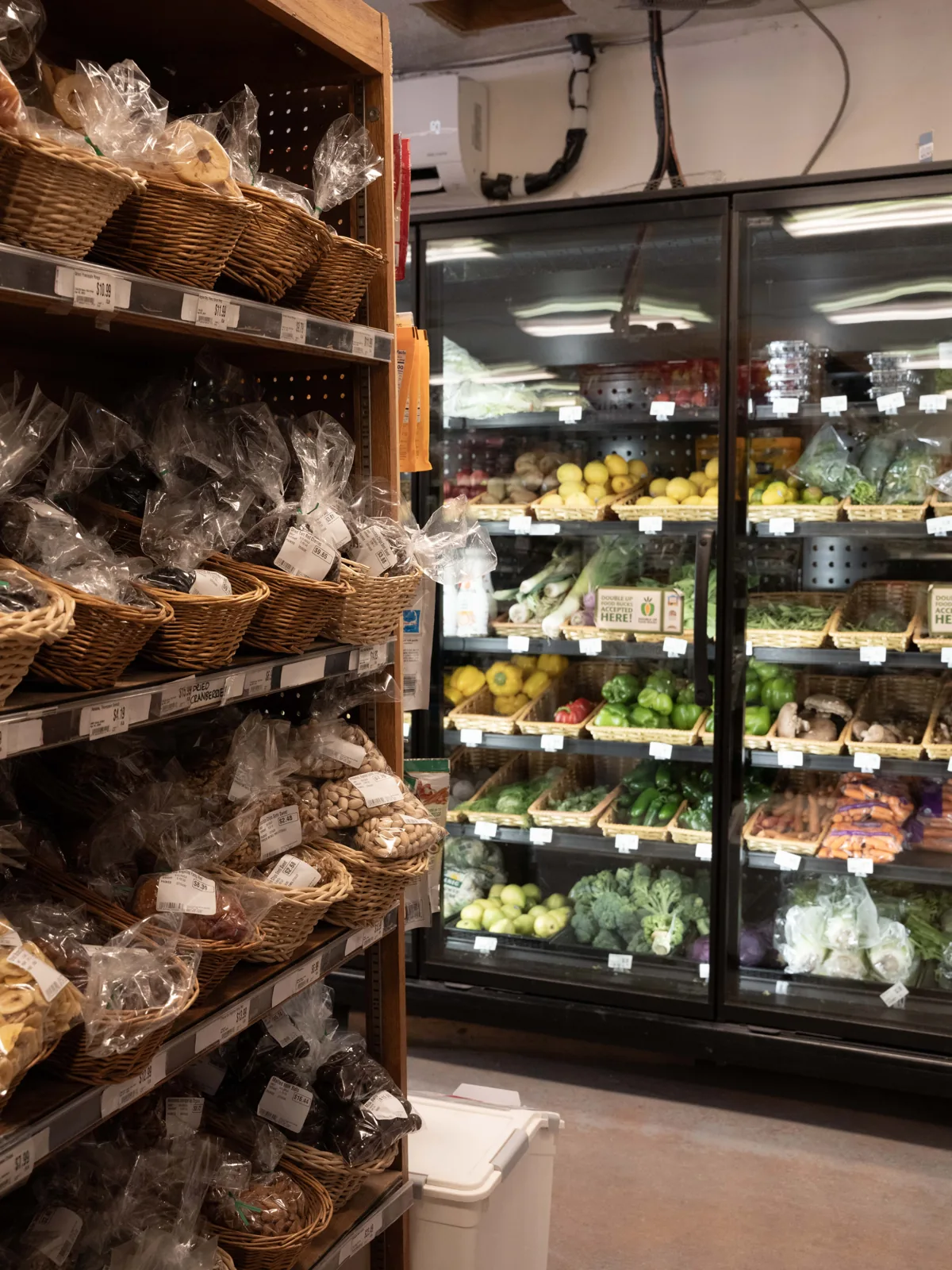
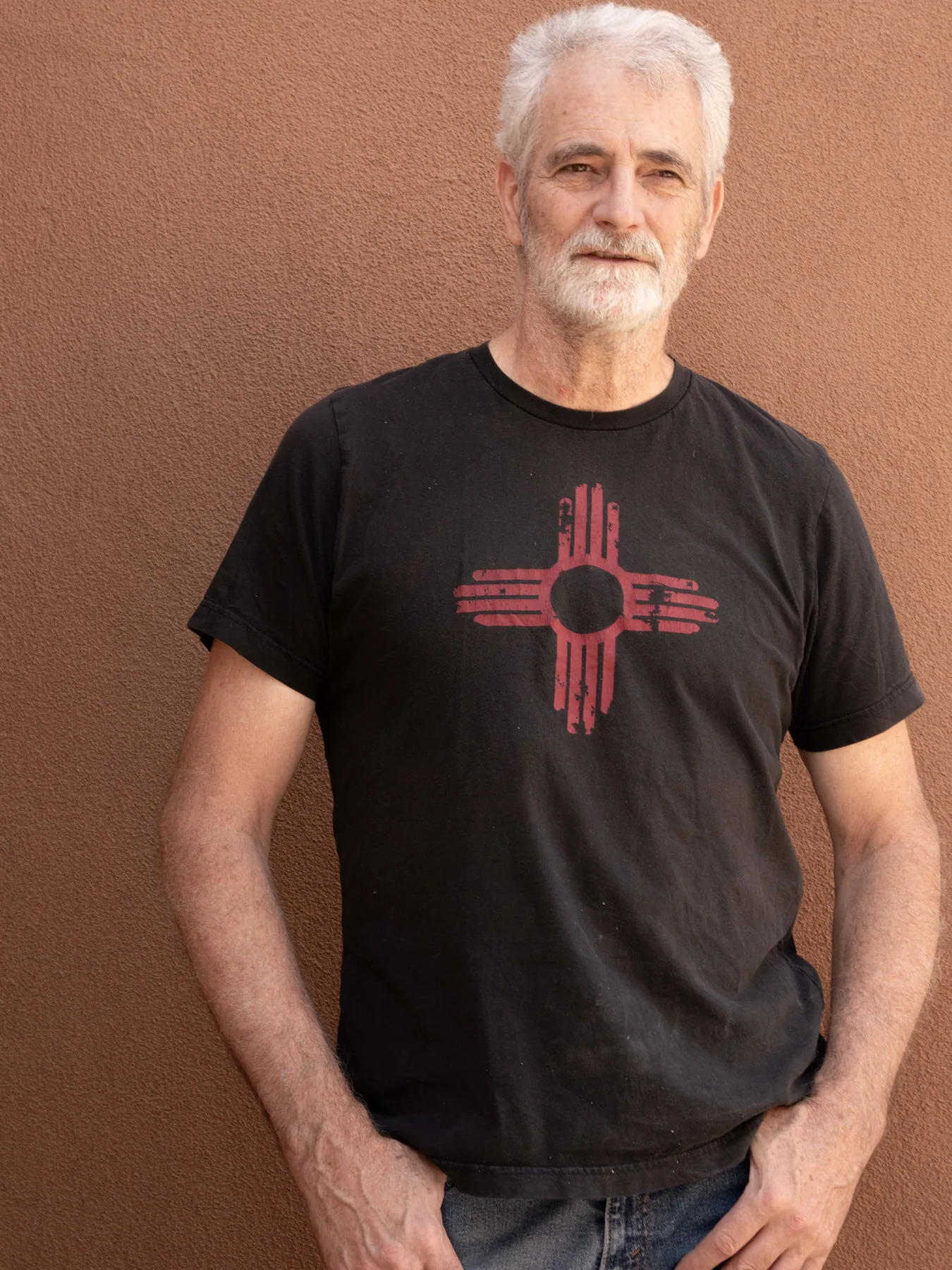
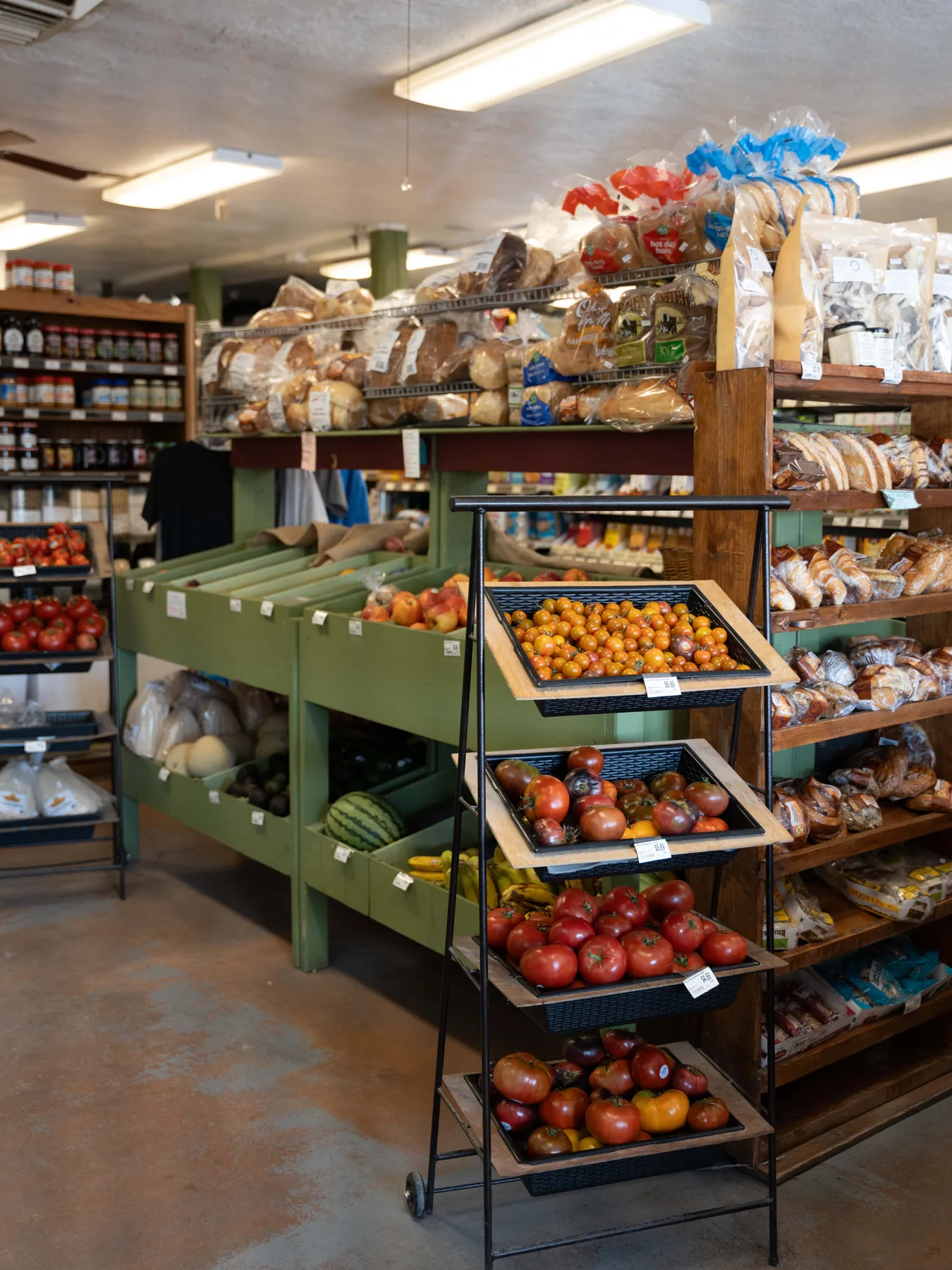
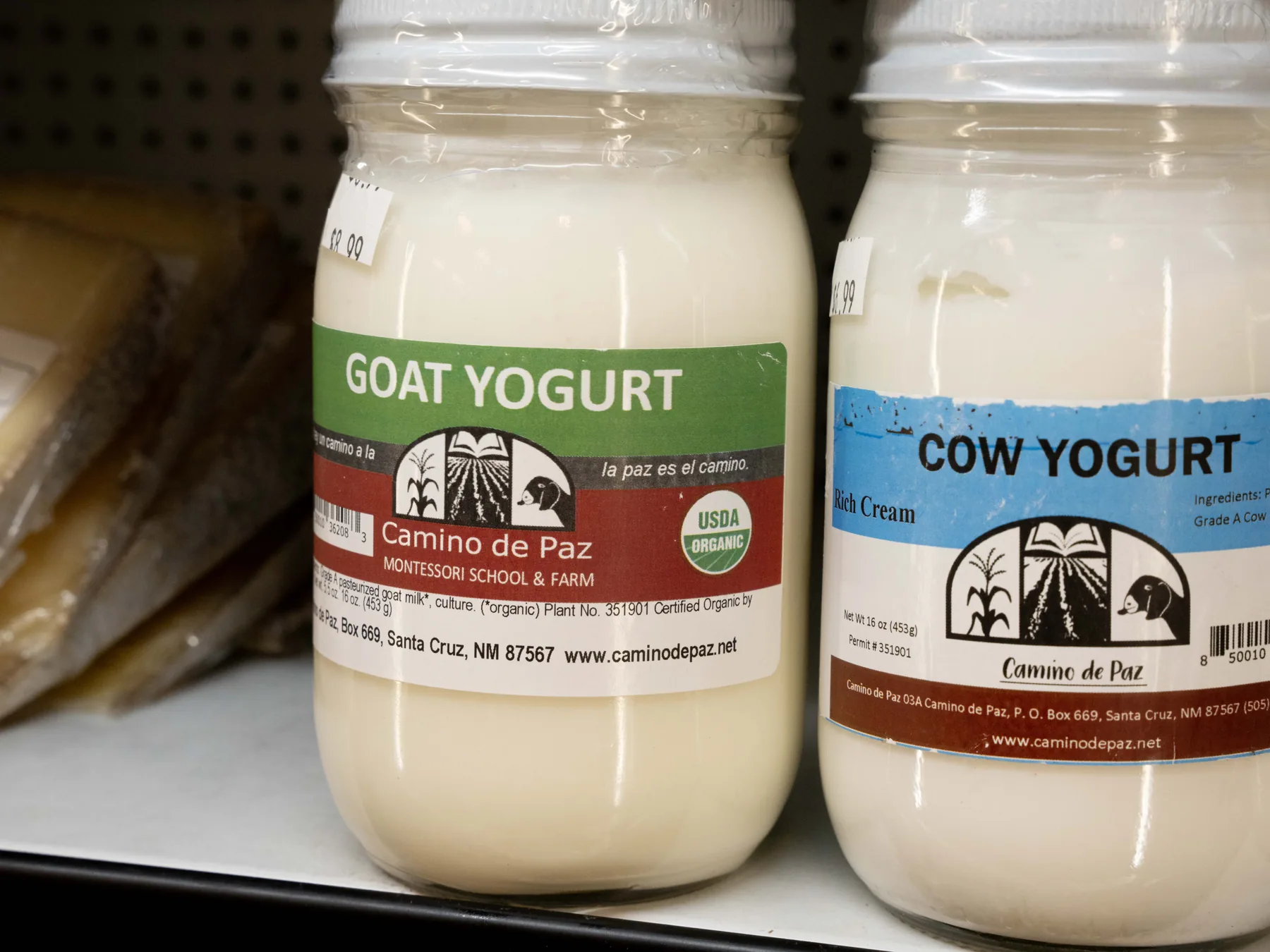
Clark Case told me what you can buy at the Dixon Cooperative Market: organic tofu, Twinkies, Coca-Cola. The school is across the street, and the post office is just beyond the library. If you need groceries somewhere else, Clark put the drive at about half an hour each way.
The Embudo Valley Library owned the building where Lebeo’s, Dixon’s historic grocery store, used to be. The co-op started with about 500 square feet in that same building. When we spoke in June, Clark said the store had grown to more than 3,000. They finally had room to bring a pallet through the back. For a little grocery that has to meet a supplier’s minimum order, being able to take that delivery changes what it can buy.
Growers have a place to sell, and people can work close to home. Clark said two percent of sales went to the library, which still owns the building and uses that money for its work in Dixon.
Somewhere between getting the groceries and going home, there’s time to stop in the aisle. Here’s how Clark described it.
“You see it, just people standing in the aisles and solving problems, community problems.”
The receiving area also made Case wonder whether Dixon could help other small stores that have the same freight problem. That was still a possibility when we spoke. There would be routes to arrange, people to unload and costs to work out.
Asked what would make Dixon more resilient ten years from now, Case began with farming and water. “That’s why we’re here,” he said. “Because the river runs through.” The new cooler buys time for food already harvested. The river runs through the town, and in a dry year there is only so much water to go around.
About the work
- The need
- Food access and room to gather
- What changed
- The library offered space, and the co-op added storage and pallet receiving as it grew.
- What’s still difficult
- Freight costs affect what staff can stock. In a dry year, farmers have less water to grow food. Helping supply other stores was a possibility raised in the interview.
Interview
Food, wages and the library
Tina Trout What needs in your community does this work satisfy?
Clark Case We have a few important ones. The first one is providing food. It’s at least half an hour in either direction, which makes an hour-long trip just to get food. Someone had to provide that service to the community, so that’s why we started the co-op twenty-some years ago.
Clark Case We sell about $1.3 million annually at this point. Of that, about $400,000 stays right here in Dixon through wages, purchases of farm products and crafts sales. Two percent of our sales go to the Embudo Valley Library. They’re our landlord. We rent the building from them, and that comes up to over $25,000 a year at this point that they can use to do their services for the community.
The people and resources behind the store
Tina Trout What relationships absolutely must exist for your work to happen successfully?
Clark Case The employees are all local people. When we opened twenty years ago, we convinced the library to give us 500 square feet in this building. With the expansion we’ve done, it’s grown to over 3,000 square feet.
Clark Case One big strength is the commitment to community that so many of the people involved in this have. Our treasurer was an accountant before she retired. Our board president was an IT specialist. Those types of talents are key to its success.
Receiving and margins
Clark Case We’ve looked into developing relationships with other small stores in the area. They have the same problems we’ve always had. In solving our problems, we might be able to assist them in the distribution of goods.
Tina Trout What tensions, obstacles or challenges have been the most difficult to navigate?
Clark Case There’s being rural. It’s really impacted by how much you sell. It’s easier to find $30,000 a month if you’re selling $200,000 a month than if you’re selling $100,000 a month.
What the town has now
Tina Trout What exists today because of this work that didn’t exist before, and who or what has benefited?
Clark Case The restaurant and the businesses that opened after we did all did incredible work to create their businesses. I think us being here helped them, and them being here helps us a lot too.
Clark Case The other thing is creating a place that people can actually meet, talk and get to know each other. For the year or couple of years that we didn’t exist and no other store existed, the only place to meet was either the library or the post office.
Farming and water
Tina Trout What would make your community more resilient over the next ten years?
Clark Case What makes us more resilient is farming and water.
[…]
Clark Case That water resource is key to small towns even existing. That’s why we’re here. The river runs through.
More from Kiara’s visit 8 photographs